Media, Broadcast and Production (with an Occupational Specialism in Content Creation and Production) - T Level
Start Date: 1st September 2026
- Length 2 Years
- Study Full-Time
- Location Kidderminster College
More about the course
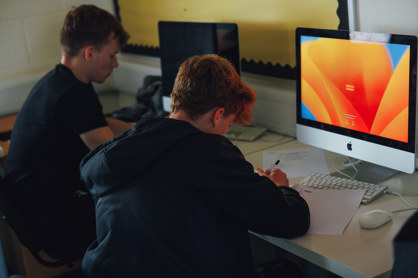
Dive into the dynamic world of digital media creation and turn your passion into your professional career. Our course is your gateway to mastering the skills and professional experience you need to create cutting-edge videos, immersive audio productions, and engaging digital content. We offer you 315 hours of work placement with two separate professional creative media-arts employers in the area. At Kidderminster College you will get to work with industry professionals on live real world projects: filming, creating digital content, and/or marketing.
Whether you're aspiring to work in the world of film and television production as a director, editor or script writer, or if you want to work as a YouTube creator, podcaster, social media expert, or media journalist, this course is designed to unlock your potential and inspire your creativity.
Previous graduates have gone on to work in the film and television industry direct or pursued degrees at University studying subjects like Film-Making, Graphic Design, Media, Media Journalism, Photography and Media Marketing.
Learn to craft polished, professional content that stands out in a crowded digital landscape. Your creative journey starts here in our media suite, television studio, working with visiting directors and writers and in our industry work placements.
Entry requirements:
You will hold 5 GCSE’s at grade 4 or above including English and Maths.
Alternatively, you will hold a Level 2 Diploma at Merit grade in the subject.
You will successfully complete a mandatory interview with either an audition or portfolio of work.
Please note that entry requirements and course offer can be subject to change at any time.
What will I achieve?
Upon successful completion of this course, you will receive a T Level Media, Broadcast and Production qualification.
What will I learn?
- Film-making including: editing, lighting-camera work, writing, directing and producing
- Podcasting
- Sound editing/foley work
- Social media and marketing content creation
In your second year you will study your chosen field in more detail through the qualification's occupational specialism and a tailored work placement programme. By the end of your two years, you will have a portfolio of work to show prospective employers including: short films, podcasts, marketing content, live streaming, documentaries and radio programmes.
How is the course taught?
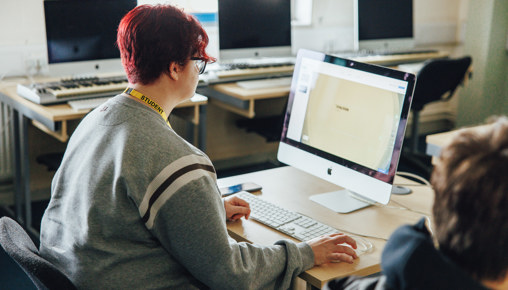
- Practical and theory sessions on campus.
- Live briefs and projects.
- 315 hours of work placement.
How am I assessed?
- Completion of 315 hours of work placement.
- 2 Core Exams.
- Completion of Occupational Specialism.
Work experience opportunities:
As part of your course, you will be required to complete a period of work experience. This forms an essential component of your overall study hours and is designed to support your learning and progression. The number of hours you need to complete will vary depending on the level and type of qualification you are undertaking. There is an expectation that your placement will be relevant to your chosen course, helping you gain valuable insight and practical skills in your subject area. While learners are expected to secure their own placement, our dedicated Work Experience Coordinator will support you throughout the process and ensure that all placements meet the necessary compliance and safeguarding requirements.
English and Maths:
- Learners aged 16 -18 will be expected to study English and Maths as a mandatory requirement for the study programme if GCSE grade 4 and above are not achieved.
Tutorial
Tutorial is a program of essential topics affecting you as a potential employee and member of a community. You will cover topics to improve employability skills, mental fitness (both for you and those around you) and much more. It is an essential part of your personal development.
As part of you weekly timetable, you will be expected to take part in Tutorial. This consists of a 1-1 meeting (at least 3 a year) and Personal Development activities that develop you both personally and professionally. Part of the focus is to raise digital Standards and take part in Employer Engagement Activities such as guest speakers, logging Work Experience and in person and online networking.
We work with Student Experience, Careers and your Curriculum team to ensure your Tutorial elements link to your industry area and to create opportunities to develop key skills for profile raising as well as enabling you to create competitive applications and CVs.
Tutorial is also an opportunity to check in with you as part of a group and individually. You can discuss any issues you might be having that affect your learning and essentially identify strategies and support available to you.
Where can I progress?
- Upon successful completion of this course, you can go progress onto our Higher Education course BA Hons Creative Industries Top Up or go onto complete a university degree.
- Alternatively, you can go into employment through various areas, including film, television, and advertising, becoming a producer, YouTuber, podcaster, and streamer/influencer.
Get in Touch
Meet our tutors and students

Joshua Prior
Tutor - MediaJoshua Prior is a local filmmaker, actor and recent graduate from the University of Worcester, where along with First Class Honours, was awarded the Robert Burley Memorial Award for New Talent in Filmmaking. Beyond his studies, Josh has had the opportunity to work on personal passion projects in film and content creation, which resulted in winning the Best UK Feature award at the Realtime International Film Festival, as well as interviews with Worcester University’s Press Office and BBC Hereford & Worcester. Mostly working as an assistant director, Josh has gained experience in managing film sets, facilitating the best environment for creatives to thrive. He aims provide the same experience for his students.
Media
Gallery
What can I do with a qualification in Media, Broadcast and Production?
Daily tasks:
- Produces works on commission basis for clients.
- Markets and sells finished work directly to customers.
- Liaises with writers and publishers to produce book illustrations.
- Uses artistic skills to restore damaged artworks.
- Approaches managers of galleries and exhibitions in order to get finished work displayed.
- Builds up composition into finished work by carving, sculpting, etching, painting, engraving, drawing, etc..
- Prepares sketches, scale drawings or colour schemes.
- Selects appropriate materials, medium and method.
- Onceives and develops ideas and ways of working for artistic composition.
Powered by EMSI
Daily tasks:
- Selects, contracts, markets and arranges for the presentation and/or distribution of performance, visual and heritage arts.
- Manages health and safety issues.
- Ensures necessary equipment, props, performers and technical staff are on set when required.
- Prepares rehearsal and production schedule for main events, design of sets and costumes, technical rehearsals and dress rehearsals.
- Breaks script into scenes and formulates a shooting schedule that will be most economical in terms of time, location and sets.
- Directs actors, designers, camera team, sound crew and other production and technical staff to achieve desired effects.
- Chooses writers, scripts, technical staff and performers, and assumes overall responsibility for completion of project on time and within budget.
Powered by EMSI
Daily tasks:
- Operates sound mixing and dubbing equipment to obtain desired mix, level and balance of sound.
- Manages health and safety issues.
- Operates equipment to record, edit and play back films and television programmes.
- Checks operation and positioning of projectors, vision and sound recording equipment, and mixing and dubbing equipment.
- Controls transmission, broadcasting and satellite systems for television and radio programmes, identifies and solves related technical problems.
- Takes, records and manipulates digital images and digital video footage.
- Photographs subject or follows action by moving camera.
- Operates scanning equipment to transfer image to computer and manipulates image to achieve the desired effect.
- Inserts lenses and adjusts aperture and speed settings as necessary.
- Arranges subject, lighting, camera equipment and any microphones.
Powered by EMSI
What can I do with a qualification in Media, Broadcast and Production?
Artists
Daily tasks:
- Produces works on commission basis for clients.
- Markets and sells finished work directly to customers.
- Liaises with writers and publishers to produce book illustrations.
- Uses artistic skills to restore damaged artworks.
- Approaches managers of galleries and exhibitions in order to get finished work displayed.
- Builds up composition into finished work by carving, sculpting, etching, painting, engraving, drawing, etc..
- Prepares sketches, scale drawings or colour schemes.
- Selects appropriate materials, medium and method.
- Onceives and develops ideas and ways of working for artistic composition.
Powered by EMSI
Arts Officers, Producers and Directors
Daily tasks:
- Selects, contracts, markets and arranges for the presentation and/or distribution of performance, visual and heritage arts.
- Manages health and safety issues.
- Ensures necessary equipment, props, performers and technical staff are on set when required.
- Prepares rehearsal and production schedule for main events, design of sets and costumes, technical rehearsals and dress rehearsals.
- Breaks script into scenes and formulates a shooting schedule that will be most economical in terms of time, location and sets.
- Directs actors, designers, camera team, sound crew and other production and technical staff to achieve desired effects.
- Chooses writers, scripts, technical staff and performers, and assumes overall responsibility for completion of project on time and within budget.
Powered by EMSI
Photographers, Audio-visual and Broadcasting Equipment Operators
Daily tasks:
- Operates sound mixing and dubbing equipment to obtain desired mix, level and balance of sound.
- Manages health and safety issues.
- Operates equipment to record, edit and play back films and television programmes.
- Checks operation and positioning of projectors, vision and sound recording equipment, and mixing and dubbing equipment.
- Controls transmission, broadcasting and satellite systems for television and radio programmes, identifies and solves related technical problems.
- Takes, records and manipulates digital images and digital video footage.
- Photographs subject or follows action by moving camera.
- Operates scanning equipment to transfer image to computer and manipulates image to achieve the desired effect.
- Inserts lenses and adjusts aperture and speed settings as necessary.
- Arranges subject, lighting, camera equipment and any microphones.
Powered by EMSI
 How To Apply For a Course
 Work Experience - Student
 Student Support
 Levels Explained
What's happening?


Events
May Open Evening
Kidderminster College
Wednesday 13th May 2026
5:30pm - 7:30pm
Course Added
This course has now been added to your basket. Please click below to apply now or contine browsing.
Apply Now