
Electrotechnical Engineering - T Level
Start Date: 1st September 2026

- Length 2 Years
- Study Full-Time
- Location Kidderminster College
Qualification Gained
T Level Technical Qualification in Building Services in Engineering for Construction
Levels ExplainedMore about the course
Do you want to work in the construction industry as a qualified electrician? Do you have a logical mind but also want to work in a hands-on role?
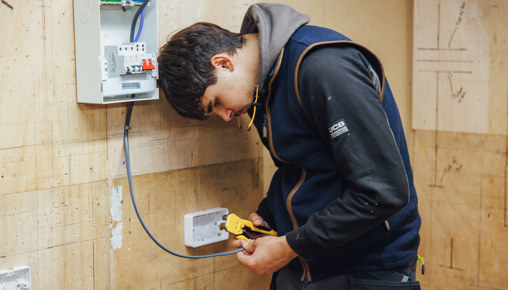
This T Level in Electrotechnical Engineering will help you to develop the knowledge and skills that you need to work in the Building Services Engineering industry and allow you to specialise as an installation or maintenance electrician.
On this two-year course, you'll spend most of your time in college learning the theoretical and practical skills you will need, studying a range of topics from Health and Safety to the principles of construction design, and sustainability to systems and components. You will complete the course with the ability to install, maintain and decommission electrotechnical systems, along with a solid understanding of the industry.
You will be taught by tutors who have years of experience working in the industry and undertake a work placement with an employer for a minimum of 45 days throughout your course, giving you the chance to put your new skills into practice and be prepared to thrive in the workplace.
Alongside your studies, you will have the chance to take part in competitions including SkillBuild and inter-college competitions to showcase your skills.
You will also have the opportunity to gain your CSCS card which allows you to work on a building site.
Entry requirements:
You will hold a grade 4 or above in GCSE English and Maths.
You will also hold a Level 2 qualification in Electrical Installation.
Please note that entry requirements and course offer can be subject to change at any time.
What will I achieve?
At the end of this two-year course, you will gain a T Level Technical Qualification in Building Services in Engineering for Construction.
What will I learn?
- Key stages of design process
- Insulating materials
- Sustainable solutions
- Technology
- Building regulations and approved documents
- Electrotechnical principles
How is the course taught?
- Theory lessons
- Practical lessons
- Placement project set by employer
You will be based at the Green Technology Centre. Classes generally run between 9:00am - 5:00pm but may vary.
How am I assessed?
- Written externally marked exams
- Practical observation/exams
Work experience opportunities:
As part of your course, you will be required to complete a period of work experience. This forms an essential component of your overall study hours and is designed to support your learning and progression. The number of hours you need to complete will vary depending on the level and type of qualification you are undertaking. There is an expectation that your placement will be relevant to your chosen course, helping you gain valuable insight and practical skills in your subject area. While learners are expected to secure their own placement, our dedicated Work Experience Coordinator will support you throughout the process and ensure that all placements meet the necessary compliance and safeguarding requirements.
English and Maths:
English skills are embedded within the Electrical qualification content. This includes reading and comprehending theoretical study texts, writing reports or documentation related to the industry, and effective communication in professional settings. You are encouraged to develop your written and oral communication skills, presentation skills, and the ability to analyse and evaluate information.
Maths is also embedded within the vocational context. It focuses on applying mathematical concepts and techniques relevant to the specific industry. You will learn to solve industry-specific mathematical problems. The aim is to develop numeracy skills that are directly applicable to real-world scenarios encountered in Electrical work.
Tutorial
Tutorial is a program of essential topics affecting you as a potential employee and member of a community. You will cover topics to improve employability skills, mental fitness (both for you and those around you) and much more. It is an essential part of your personal development.
As part of you weekly timetable, you will be expected to take part in Tutorial. This consists of a 1-1 meeting (at least 3 a year) and Personal Development activities that develop you both personally and professionally. Part of the focus is to raise digital Standards and take part in Employer Engagement Activities such as guest speakers, logging Work Experience and in person and online networking.
We work with Student Experience, Careers and your Curriculum team to ensure your Tutorial elements link to your industry area and to create opportunities to develop key skills for profile raising as well as enabling you to create competitive applications and CVs.
Tutorial is also an opportunity to check in with you as part of a group and individually. You can discuss any issues you might be having that affect your learning and essentially identify strategies and support available to you.
Where can I progress?
Upon completion of this course, you can go on to complete an apprenticeship, get a job in the industry, or go onto higher education.
Equivalent to 3 A Levels:
T Levels are an alternative to A levels, apprenticeships and other 16 to 19 courses. Equivalent in size to 3 A levels, a T Level focuses on vocational skills and can help students into skilled employment, higher study, or apprenticeships.
Get in Touch
Meet our tutors and students

Adam Griffin
Green Technology Centre ManagerAs a dedicated Site Manager, I oversee the centre's daily operations and support learners in their journey toward achieving their qualifications. My responsibilities include managing four departments: Motor Vehicle, Vehicle Respraying, Bricklaying, and Property Maintenance Operations, offering qualifications ranging from Level 1 to Level 3, as well as apprenticeship programs in these areas. With a background as a fully qualified motor mechanic and vehicle respraying tutor for eight years, I bring hands-on expertise to my role in management.
Meet our tutors and students
Electrical
Gallery
What can I do with a qualification in Electrotechnical Engineering?
Daily tasks:
- Visits and advises clients on the use and servicing of electrical and electronic systems and equipment.
- Diagnoses and detects faults and implements procedures to maintain efficient operation of systems and equipment.
- Plans installation methods, checks completed installation for safety and controls or undertakes the initial running of the new electrical or electronic equipment or system.
- Sets up equipment, undertakes tests, takes readings, performs calculations and records and interprets data.
- Plans and prepares work and test schedules based on specifications and drawings.
Powered by EMSI
Daily tasks:
- Examines electrical plant or machinery, domestic appliances and other electrical assembly for faults using test equipment and replaces worn parts and faulty wiring.
- Installs electrical plant, machinery and other electrical fixtures and appliances such as fuse boxes, generators, light sockets etc..
- Assembles parts and sub-assemblies using hand tools and by brazing, riveting or welding.
- Cuts, bends and installs electrical conduit.
- Selects, cuts and lays wires and connects to sockets, plugs or terminals by crimping, soldering, brazing or bolting.
- Examines drawings, specifications and wiring diagrams to determine the method and sequence of operations.
Powered by EMSI
Daily tasks:
- Levels, aligns and embeds stone in mortar and faces brick, concrete or steel frame with stone to make and repair structures.
- Uses hand and power tools to shape, trim, carve, cut letters in and polish stone.
- Spreads mortar on foundations and bricks, and places, levels and aligns bricks in mortar bed.
- Marks and cuts stone using hammers, mallet and hand or pneumatic chisels.
- Examines drawings, photographs and specifications to determine job requirements.
Powered by EMSI
Daily tasks:
- Maintains and repairs woodwork and fittings.
- Checks accuracy of work with square, rule and spirit level.
- Aligns and fixes prepared wood pieces by screwing, nailing, gluing and dowelling to form frames, shop fronts, counter units, decking, theatrical sets, furniture, small wooden craft, scale models and wooden templates.
- Selects and measures appropriate wood and cuts, shapes and drills to specification using saws, planes, chisels and other power or hand tools.
- Examines drawings and specifications to determine job requirements.
Powered by EMSI
Daily tasks:
- Stains, waxes and french polishes wood surfaces by hand.
- Mixes adhesive or removes self-adhesive backing and positions covering material on wall, matching up patterns where appropriate and removing wrinkles and air bubbles by hand or brush.
- Applies primer, undercoat and finishing coat(s) using brush, roller, or spray equipment.
- Prepares surfaces by cleaning, sanding and filling cracks and holes with appropriate filler.
- Erects working platform or scaffolding up to five metres in height.
Powered by EMSI
Daily tasks:
- Checks fire and safety equipment for adequate functioning.
- Undertakes minor repairs and notifies owner of need for major repairs.
- Controls heating, lighting and security systems.
- Supervises and/or undertakes the cleaning and maintenance of premises.
- Locks and unlocks doors and entrances at appropriate times.
Powered by EMSI
What can I do with a qualification in Electrotechnical Engineering?
Electrical and Electronics Technicians
Daily tasks:
- Visits and advises clients on the use and servicing of electrical and electronic systems and equipment.
- Diagnoses and detects faults and implements procedures to maintain efficient operation of systems and equipment.
- Plans installation methods, checks completed installation for safety and controls or undertakes the initial running of the new electrical or electronic equipment or system.
- Sets up equipment, undertakes tests, takes readings, performs calculations and records and interprets data.
- Plans and prepares work and test schedules based on specifications and drawings.
Powered by EMSI
Electricians and Electrical Fitters
Daily tasks:
- Examines electrical plant or machinery, domestic appliances and other electrical assembly for faults using test equipment and replaces worn parts and faulty wiring.
- Installs electrical plant, machinery and other electrical fixtures and appliances such as fuse boxes, generators, light sockets etc..
- Assembles parts and sub-assemblies using hand tools and by brazing, riveting or welding.
- Cuts, bends and installs electrical conduit.
- Selects, cuts and lays wires and connects to sockets, plugs or terminals by crimping, soldering, brazing or bolting.
- Examines drawings, specifications and wiring diagrams to determine the method and sequence of operations.
Powered by EMSI
Bricklayers and Masons
Daily tasks:
- Levels, aligns and embeds stone in mortar and faces brick, concrete or steel frame with stone to make and repair structures.
- Uses hand and power tools to shape, trim, carve, cut letters in and polish stone.
- Spreads mortar on foundations and bricks, and places, levels and aligns bricks in mortar bed.
- Marks and cuts stone using hammers, mallet and hand or pneumatic chisels.
- Examines drawings, photographs and specifications to determine job requirements.
Powered by EMSI
Carpenters and Joiners
Daily tasks:
- Maintains and repairs woodwork and fittings.
- Checks accuracy of work with square, rule and spirit level.
- Aligns and fixes prepared wood pieces by screwing, nailing, gluing and dowelling to form frames, shop fronts, counter units, decking, theatrical sets, furniture, small wooden craft, scale models and wooden templates.
- Selects and measures appropriate wood and cuts, shapes and drills to specification using saws, planes, chisels and other power or hand tools.
- Examines drawings and specifications to determine job requirements.
Powered by EMSI
Painters and Decorators
Daily tasks:
- Stains, waxes and french polishes wood surfaces by hand.
- Mixes adhesive or removes self-adhesive backing and positions covering material on wall, matching up patterns where appropriate and removing wrinkles and air bubbles by hand or brush.
- Applies primer, undercoat and finishing coat(s) using brush, roller, or spray equipment.
- Prepares surfaces by cleaning, sanding and filling cracks and holes with appropriate filler.
- Erects working platform or scaffolding up to five metres in height.
Powered by EMSI
Caretakers
Daily tasks:
- Checks fire and safety equipment for adequate functioning.
- Undertakes minor repairs and notifies owner of need for major repairs.
- Controls heating, lighting and security systems.
- Supervises and/or undertakes the cleaning and maintenance of premises.
- Locks and unlocks doors and entrances at appropriate times.
Powered by EMSI
Good to know
What's happening?

Events
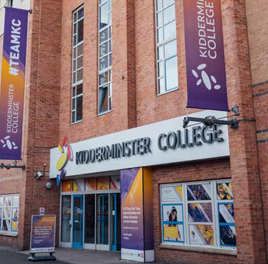

May Open Evening
Kidderminster College
Wednesday 13th May 2026
5:30pm - 7:30pm
Course Added
This course has now been added to your basket. Please click below to apply now or contine browsing.
Apply Now