
Creative Games Design - Level 2
Start Date: 1st September 2026
- Length 1 Year
- Study Full-Time
- Location Kidderminster College
Qualification Gained
Level 2 Diploma in Creative Media Production and Technology (Games Design Pathway)
Levels ExplainedMore about the course
Games Design is a booming industry bursting with creative talent and innovation! With extensive job progression and opportunities, this is an amazing industry to get into!
Our UAL Creative Games Design - Level 2 course covers the fundamental design and development elements required to develop and produce an exciting game. From creating your own industry-standard design documents to developing the technical skills to begin your own projects, this Level 2 course gives learners a thorough grounding in game design as a whole.
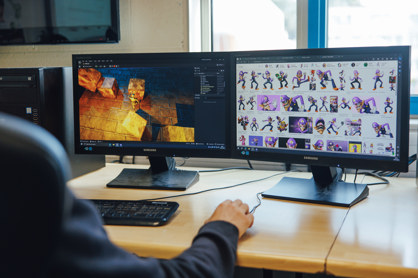
You do not need any pre-existing knowledge of Blender and Unreal Engine as your skills will be developed, culminating in creating a small game of your very own. Along the way, you will have the opportunity to develop complementary skills such as creative writing, concept art, audio design, and more!
You'll be expected to design and think creatively in this course, so you must be passionate about games design and innovation! Pre-existing creative skills are optional, but we'd expect you to work on these skills throughout the year so that you are comfortable visually presenting your ideas. This course will enable you to understand how the games development sector works, coaching and supporting you so that you can unlock your potential!
UAL (University of the Arts London) are the UK’s leading Creative Industries awarding body. They have designed their suite of qualifications with education and industry partners, to provide students with the latest knowledge and skills, and enable students to progress to higher education or employment.
Entry requirements
You will hold 3 GCSE’s at grade 2 or above.
If these requirements are not met, we will have a conversation with you around which course and level would be most appropriate.
You will successfully complete a mandatory interview with either an audition or portfolio of work.
Please note that entry requirements and course offer can be subject to change at any time.
What will I achieve?
Upon successful completion of this course, you will receive a Level 2 Diploma in Creative Media Production and Technology (Games Design Pathway).
What will I learn?
- Game design theory
- 3D modelling (Blender)
- Level and character design
- Unreal Engine
- Photoshop
- Game design industry knowledge
How is the course taught?
- Practical assignments
- Course work
- One-to-one support
- Tutorials
- Presentations
- Demonstrations
- Classwork
- Educational visits and trips.
Classes generally run between 9am-4:15pm but may vary.
How am I assessed?
There are no exams with UAL qualifications. All modules are assessed at pass/fail only until your final module, the Final Major Project - in which all the knowledge and skills you have developed over the course are put to use in a project designed by you and the tutors to showcase your unique skills and thus maximise your potential in terms of your final grade.
Work experience opportunities
As part of your course, you will be required to complete a period of work experience. This forms an essential component of your overall study hours and is designed to support your learning and progression. The number of hours you need to complete will vary depending on the level and type of qualification you are undertaking. There is an expectation that your placement will be relevant to your chosen course, helping you gain valuable insight and practical skills in your subject area. While learners are expected to secure their own placement, our dedicated Work Experience Coordinator will support you throughout the process and ensure that all placements meet the necessary compliance and safeguarding requirements.
English and maths
If you're aged 16-18 and haven't achieved a GCSE grade 4/C in English and maths, you'll need to take English and maths classes alongside your programme of study.
English is embedded verbally, or written in presentations, written analysis and group discussions. English skills are also evaluated within presentations of work, where spelling and grammar are checked and the layout of presentations must be professional.
Maths is embedded within sessions when working out resolutions, proportions, ratios, percentages and FPS (Frames Per Second). Also, mathematically-presented work is required.
Tutorial
Tutorial is a program of essential topics affecting you as a potential employee and member of a community. You will cover topics to improve employability skills, mental fitness (both for you and those around you) and much more. It is an essential part of your personal development.
As part of you weekly timetable, you will be expected to take part in Tutorial. This consists of a 1-1 meeting (at least 3 a year) and Personal Development activities that develop you both personally and professionally. Part of the focus is to raise digital Standards and take part in Employer Engagement Activities such as guest speakers, logging Work Experience and in person and online networking.
We work with Student Experience, Careers and your Curriculum team to ensure your Tutorial elements link to your industry area and to create opportunities to develop key skills for profile raising as well as enabling you to create competitive applications and CVs.
Tutorial is also an opportunity to check in with you as part of a group and individually. You can discuss any issues you might be having that affect your learning and essentially identify strategies and support available to you.
Where can I progress?
Upon completion of the course, you can go on to study Creative Games Design - Level 3 or consider Creative Media - Level 3 or Art and Design - Level 3 at Kidderminster College.
Alternatively, you can take on an apprenticeship.
Get in Touch
IT, Games Development & Design
Gallery
What can I do with a qualification in Games Design?
Daily tasks:
- Reports on IT activities to senior management.
- Plans and monitors work and maintenance schedules to ensure agreed service levels are achieved.
- Supervises the technical team and coordinates training.
- Takes responsibility for managing the development of a specialist aspect of IT provision such as user support, network operations, service delivery or quality control.
- Liaises with users, senior staff and internal/external clients to clarify IT requirements and development needs.
- Plans, coordinates and manages the organisation.
Powered by EMSI
Daily tasks:
- Reports on project or programme to senior management and/or client.
- Coordinates and oversees implementation of the project or programme.
- Monitors progress including project/programme budget, timescale and quality.
- Manages third party contributions to the programme or project.
- Coordinates and supervises the activities of the project/programme team.
- Plans the stages of the project or programme, reviews actions and amends plans as necessary.
- Works with client or senior management to establish and clarify the aims, objectives and requirements of the IT project or programme.
Powered by EMSI
Daily tasks:
- Works closely with clients to implement new systems.
- Researches, analyses, evaluates and monitors network infrastructure and performance.
- Examines existing business models and flows of data and designs functional specifications and test plans for new systems in order to meet clients.
- Provides advice and assistance in the procurement, provision, delivery, installation, maintenance and use of IT systems and their environments.
- Communicates the impact of emerging technologies to clients and advises upon the potential introduction of such technology.
- Undertakes feasibility studies for major IT developments incorporating costs and benefits, and presents proposals to clients.
- Liaises with internal/external clients in order to analyse business procedure, clarify clients.
Powered by EMSI
Daily tasks:
- Writes operational documentation and provides subsequent support and training for users.
- Plans and maintains database structures.
- Implements and evaluates the software.
- Writes code for specialist programming for computer games, (for example, artificial intelligence, 3D engine development).
- Tests and corrects software programs.
- Develops user interfaces.
- Writes and codes individual programs according to specifications.
- Undertakes feasibility study to design software solutions.
- Examines existing software and determines requirements for new/modified systems in the light of business needs.
Powered by EMSI
Daily tasks:
- Activates the 'live' website.
- Tests website interaction and performance prior to going 'live'.
- Writes and publishes content for the website.
- Establishes methods to ensure appropriate website security and recovery.
- Designs and develops web interfaces for relational database systems.
- Develops the website and applications.
- Designs web pages including graphics, animation and functionality to maximise visual effectiveness and facilitate appropriate access.
- Presents design options to the client.
- Liaises with internal/external client in order to define the requirements for the website.
Powered by EMSI
What can I do with a qualification in Games Design?
IT Specialist Managers
Daily tasks:
- Reports on IT activities to senior management.
- Plans and monitors work and maintenance schedules to ensure agreed service levels are achieved.
- Supervises the technical team and coordinates training.
- Takes responsibility for managing the development of a specialist aspect of IT provision such as user support, network operations, service delivery or quality control.
- Liaises with users, senior staff and internal/external clients to clarify IT requirements and development needs.
- Plans, coordinates and manages the organisation.
Powered by EMSI
IT Project and Programme Managers
Daily tasks:
- Reports on project or programme to senior management and/or client.
- Coordinates and oversees implementation of the project or programme.
- Monitors progress including project/programme budget, timescale and quality.
- Manages third party contributions to the programme or project.
- Coordinates and supervises the activities of the project/programme team.
- Plans the stages of the project or programme, reviews actions and amends plans as necessary.
- Works with client or senior management to establish and clarify the aims, objectives and requirements of the IT project or programme.
Powered by EMSI
IT Business Analysts, Architects and Systems Designers
Daily tasks:
- Works closely with clients to implement new systems.
- Researches, analyses, evaluates and monitors network infrastructure and performance.
- Examines existing business models and flows of data and designs functional specifications and test plans for new systems in order to meet clients.
- Provides advice and assistance in the procurement, provision, delivery, installation, maintenance and use of IT systems and their environments.
- Communicates the impact of emerging technologies to clients and advises upon the potential introduction of such technology.
- Undertakes feasibility studies for major IT developments incorporating costs and benefits, and presents proposals to clients.
- Liaises with internal/external clients in order to analyse business procedure, clarify clients.
Powered by EMSI
Programmers and Software Development Professionals
Daily tasks:
- Writes operational documentation and provides subsequent support and training for users.
- Plans and maintains database structures.
- Implements and evaluates the software.
- Writes code for specialist programming for computer games, (for example, artificial intelligence, 3D engine development).
- Tests and corrects software programs.
- Develops user interfaces.
- Writes and codes individual programs according to specifications.
- Undertakes feasibility study to design software solutions.
- Examines existing software and determines requirements for new/modified systems in the light of business needs.
Powered by EMSI
Web Design and Development Professionals
Daily tasks:
- Activates the 'live' website.
- Tests website interaction and performance prior to going 'live'.
- Writes and publishes content for the website.
- Establishes methods to ensure appropriate website security and recovery.
- Designs and develops web interfaces for relational database systems.
- Develops the website and applications.
- Designs web pages including graphics, animation and functionality to maximise visual effectiveness and facilitate appropriate access.
- Presents design options to the client.
- Liaises with internal/external client in order to define the requirements for the website.
Powered by EMSI
 How To Apply For a Course
 Work Experience - Student
 Student Support
 Levels Explained
What's happening?


Events
Course Added
This course has now been added to your basket. Please click below to apply now or contine browsing.
Apply Now